
Staying Safe When the Hills Heat Up: A Summer Guide
When a heatwave hits the UK, the instinct to head straight to the peaks of Eryri or down to the nearest body of water is overwhelming. But extreme heat introduces an entirely different set of risks than our usual wet and windy challenges.
Before you pack your speedos, here is a quick-fire summary compiled from five of the UK’s most trusted outdoor safety organisations.
1. Plan, Pack, and Protect (AdventureSmart UK)
An exceptional summer day out starts before you leave the front door. Ask yourself the classic AdventureSmart UK framework questions: Do I have the right gear? Do I know the weather? Am I confident in my skills?
The Heatwave Twist: “The right gear” shifts from waterproof shells to high-factor sunscreen, wraparound sunglasses, and wide-brimmed hats. Don’t rely on a “once-a-day” sunblock application—sweat and dirt rub it off quickly, meaning regular top-ups are essential.
2. Manage Upland Hazards & Hydration (BMC Safety Advice / BMC Fire Advice)
Ascending high ridges might give you a slight breeze, but it also leaves you completely exposed to intense UV radiation. The BMC emphasizes a full on hydration management:
Fluid & Salt: Carry more water than you think you need, alongside electrolytes to replace what you sweat out.
Wildfire Risk: Tinder-dry conditions turn our beautiful uplands into extreme fire hazards. Keep the hills safe by observing the absolute ban on campfires and BBQs in vulnerable upland habitats. Disposable BBQs are a no-no at all times of year.
3. Dynamic Leadership and Route Choice (Mountain Training)
If you are leading a group or walking with less experienced friends, hot weather requires serious tactical adjustments. Mountain Training emphasizes utilising professional judgment to adapt to the climate:
Alter the Plan: Consider shifting your itinerary to early mornings or cooler evenings.
Seek Shade: Choose lower-level valley routes with tree canopy cover over blistering, exposed crags.
Enforce Breaks: Build mandatory shade and hydration stops into your progression layout before fatigue drops your group’s morale or safety awareness.
4. Respecting the Water: “Float to Live” (RNLI)
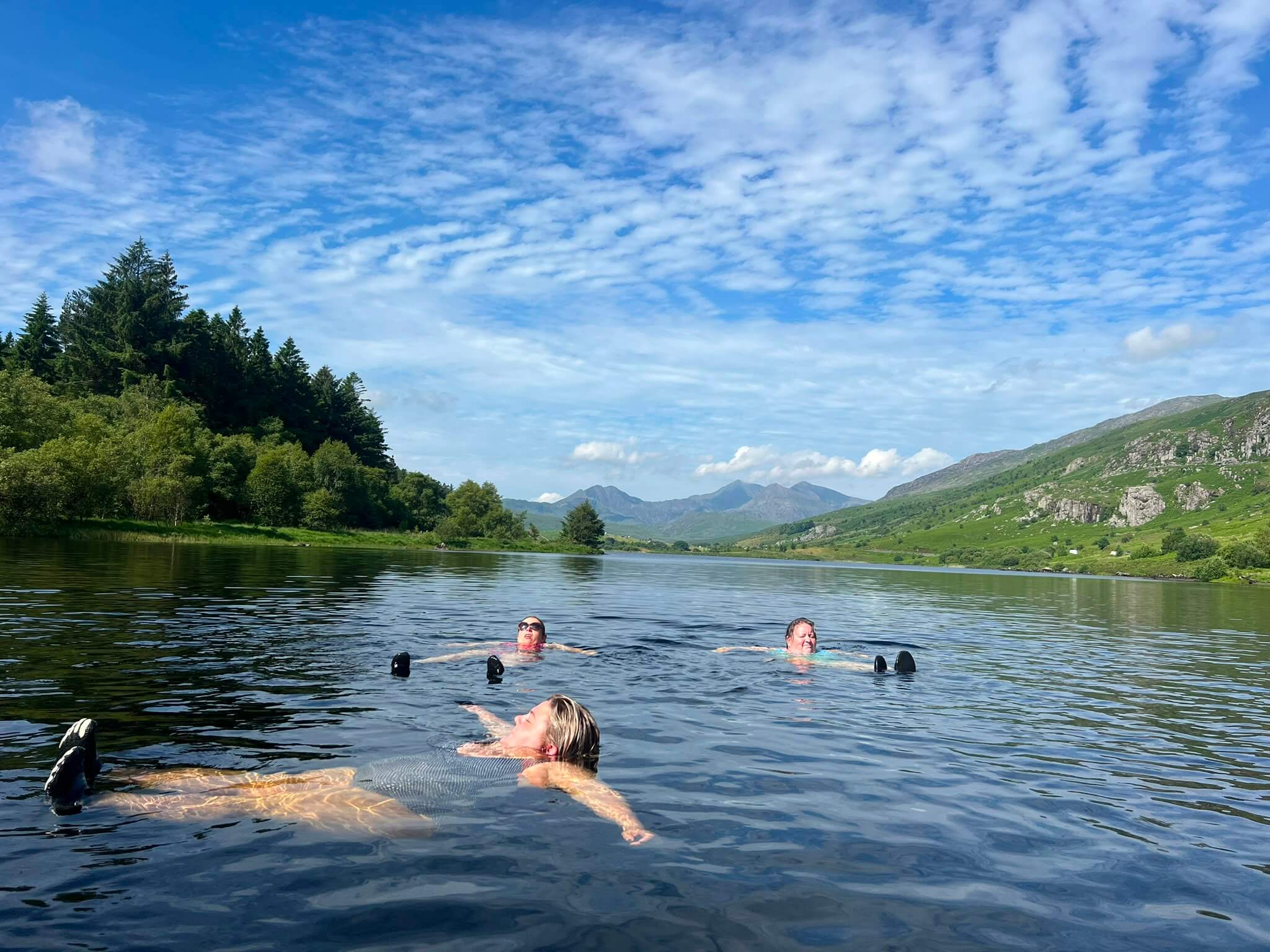
Plunging into a deep lake or a mountain tarn seems like the perfect way to cool down, but it carries a silent, physiological trap. Even in a heatwave, deep open waters in the UK remain shockingly cold.
Cold Water Shock: Sudden immersion can trigger an involuntary gasp reflex and rapid breathing, which can cause drowning in seconds.
The Technique: If you enter the water unexpectedly, follow the RNLI’s definitive advice: Float to Live. Fight the instinct to thrash. Lean back, extend your arms and legs, submerge your ears, and float calmly until your breathing settles and you can swim to safety.
5. The Science of the Dip (Outdoor Swimming Society)
Understanding how your body reacts to extreme temperature transitions can save your life. The Outdoor Swimming Society highlights two vital physiological phenomena for summer adventurers:
Cold Incapacitation: Within minutes of swimming in cold water, your body restricts blood flow to your limbs to protect your core. Your finger and arm muscles will lock up, destroying your swimming ability even if you are exceptionally fit.
Afterdrop: Don’t be fooled if you feel warm right when you step out of the water. Ten minutes later, deep cooled blood from your extremities circulates back to your core, causing your temperature to plummet. Always have warm layers ready immediately after a dip.
A great summer adventure means adjusting your mindset. Respect the sun, protect your body, and treat open water with the exact same caution you’d give a winter gale. Stay safe out there, and pop in for an ice-cream and a cold drink from the bar afterwards.