A day in the life of a GORE-TEX Jacket
Here at Plas y Brenin, we rely on gear that can handle the sheer volume and intensity of our work. That’s why our partnership with Mountain Equipment has been a cornerstone of our operations for over 20 years.
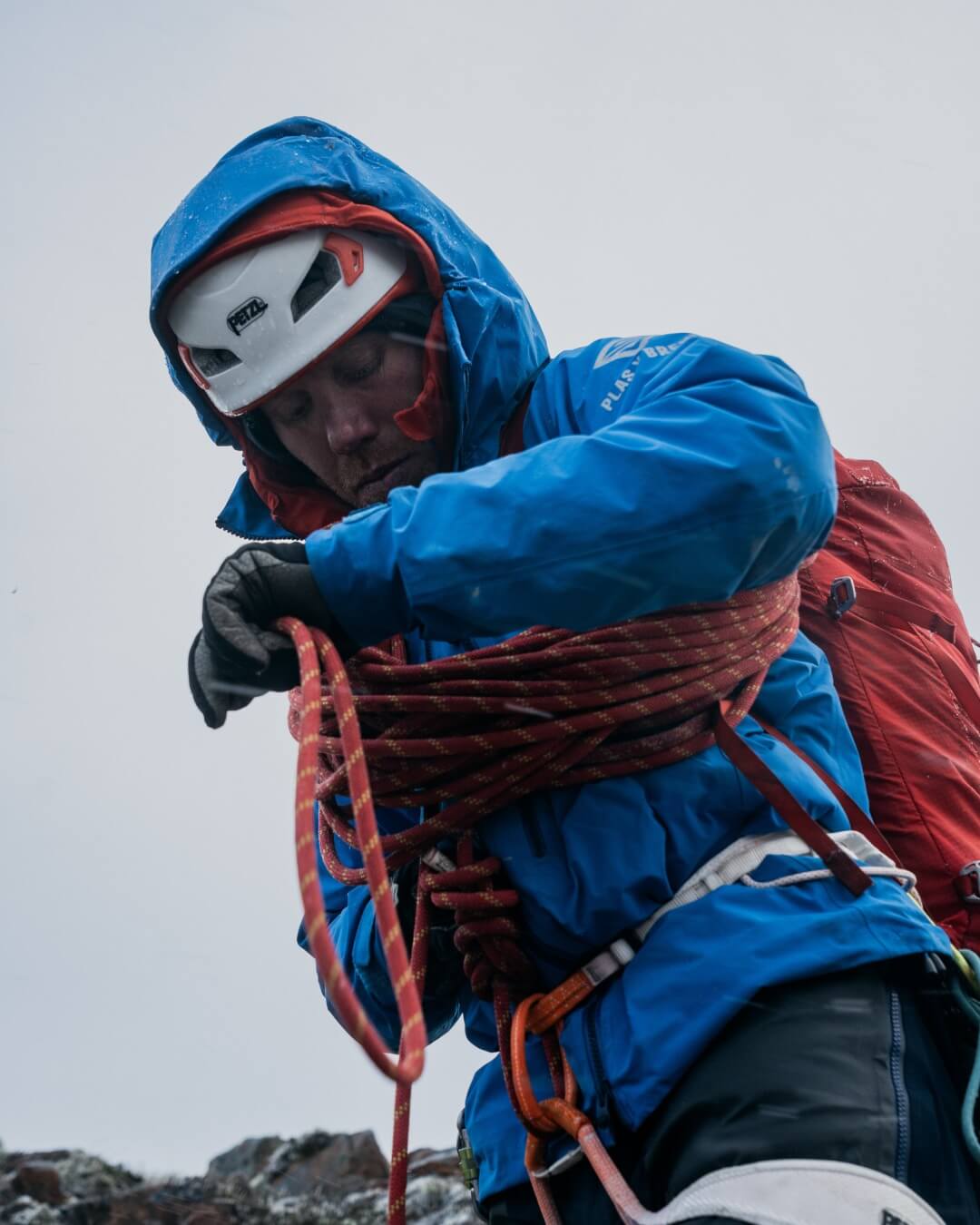
Our instructional staff are on the mountain virtually every day, all year round. Whether guiding on winter mountaineering courses or climbing for their own personal development, our gear takes an absolute pounding. This constant, accelerated use means our clothing, particularly our waterproof shells, are pushed to the very limit.
We don't just use Mountain Equipment kit; we are a crucial part of their testing and development process. By using their clothing in the worst conditions imaginable, we provide the vital, real-world feedback that helps them ensure their kit truly is Built Better. If it survives a season with a Plas y Brenin instructor, it's ready for anyone.
With such intense wear, maintaining our high-tech apparel is essential to its performance. To keep our waterproof jackets performing at their best and ready for the next downpour, our team uses Granger's Wash and Care products. It’s the only way to keep the DWR (durable water repellent) working and ensure we stay dry, safe, and comfortable.
Want to keep your gear in mountain-ready shape, just like we do?
- Check out the Mountain Equipment Waterproof Care Guide for tips on keeping your shells performing: https://www.mountain-equipment.com/pages/caring-for-waterproofs
- If your kit needs some serious TLC, explore their Wash & Repair service (UK only): https://www.mountain-equipment.com/collections/wash-repair-services
- Learn how to care for all your favorite kit in their Revere Your Gear section: https://www.mountain-equipment.com/pages/revere-your-gear

Our Partnership with O'Shea Surf
We’ve been working with O’Shea for nearly a decade now, and it’s a relationship we’re really proud of. They’re a team who share our values of creating a great product, and more importantly, helping more people get out on the water.
O’Shea was founded by Farrel O’Shea, a record-breaking windsurfer who spent his life chasing adventure. The brand grew from that passion, with a focus on creating boards that are, in their own words, “built to perform and built to last.” Just as important, they’ve always championed getting people, especially young people into board sports, and that’s been a huge driving force behind O’Shea International.
That’s why our partnership works so well. As paddlers and coaches, we’re not only about teaching technique, we’re about building confidence, sharing our passion, and giving people the tools to head off on adventures of their own.
Whether it’s schools, corporate groups, Paddle UK qualifications, or guided tours, O’Shea boards deliver the quality and reliability we need to give our community the best possible experience on the water.
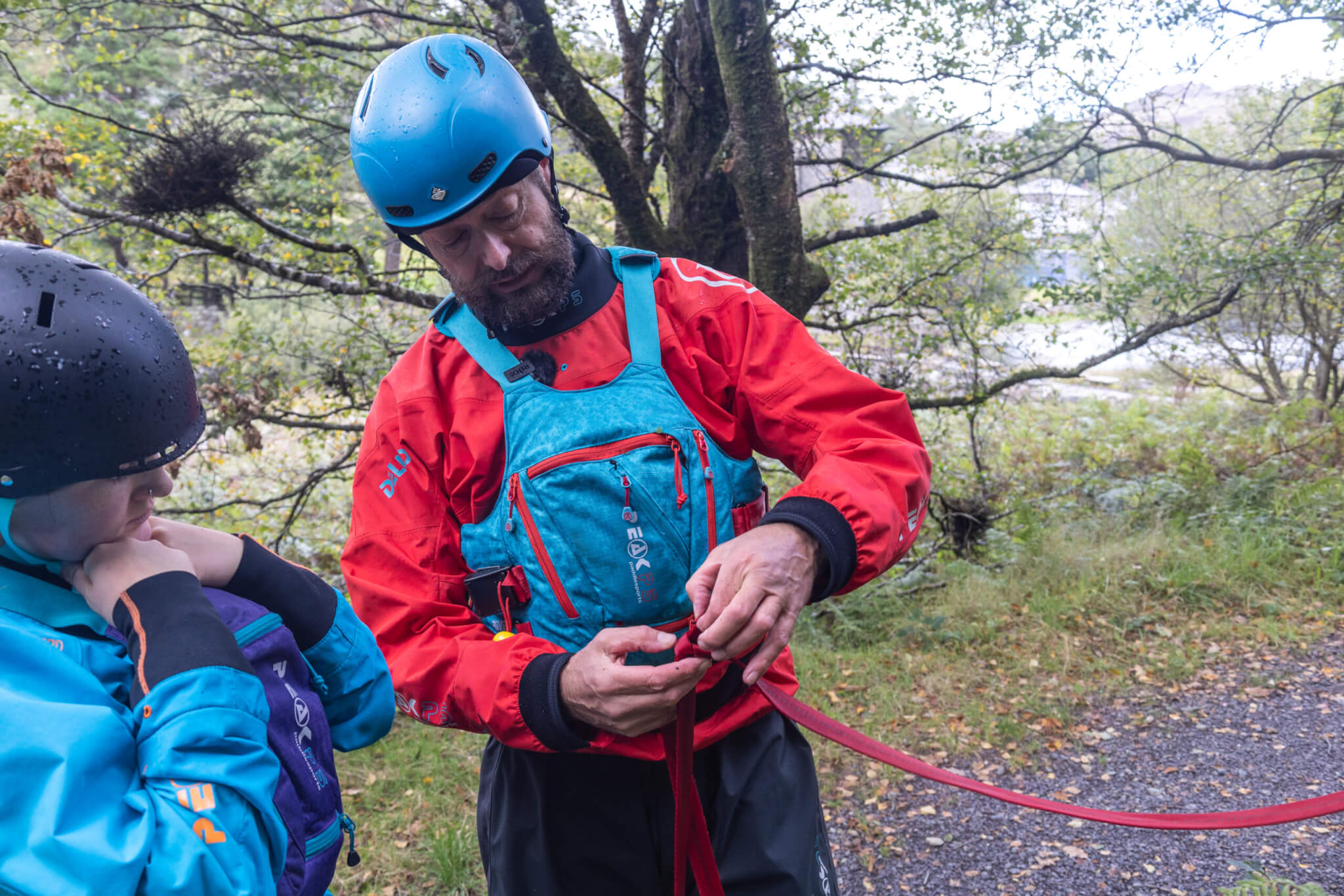
5m of tape
Paddlers: What can you do with 5m of tape?
That 5m length of tape that everyone carries in their PFD... A quick dig around will result in you discovering that there are commercially available options in lengths varying from 3m up to 8m and you can of course buy it off the reel at any good outdoor shop at almost any length you like. This article is not going to try and suggest which length is the most useful as the most useful length is the one you have in your PFD 😊. However, what it is going to try and do is suggest some of the ways it can be used. See below for a bunch of suggestions in no particular order. If you have more that you can add to the list we’d love to hear them. Especially if you have used them for real.
Safety and Rescue:
- Use it to build an anchor...
- Basket hitch
- Thread
- Wrap 3 pull 2 (the gold standard of anchors)
- As a prusik
- As part of a “pig rig”
- As a short throwline
- Use it to tow something on land or water
- Use it to raise / lower your craft
- As a painter on your craft
- To stop it floating away
- To line it down a rapid
- As a flip line for a raft
- Emergency harness
- Improvised arm sling
- Hold a splint in place
- Use it to mark the takeout
- Rafting canoes together
- As stirrup to get some back in / on their craft
Camp / River Life Bodges:
- As a washing line
- To tie boats on when you’ve forgotten / run out of straps
- Belt for your trousers
- Dog lead
- Improvised hand line for fishing
- Drop it (with a carabiner on the end) as a depth gauge in murky water
- Repair a head lamp strap
- Guyline for your tent or tarp
- Bundle and carry firewood
- Lash down a broken pack, barrel lid, or hatch cover
- Hang food away from animals
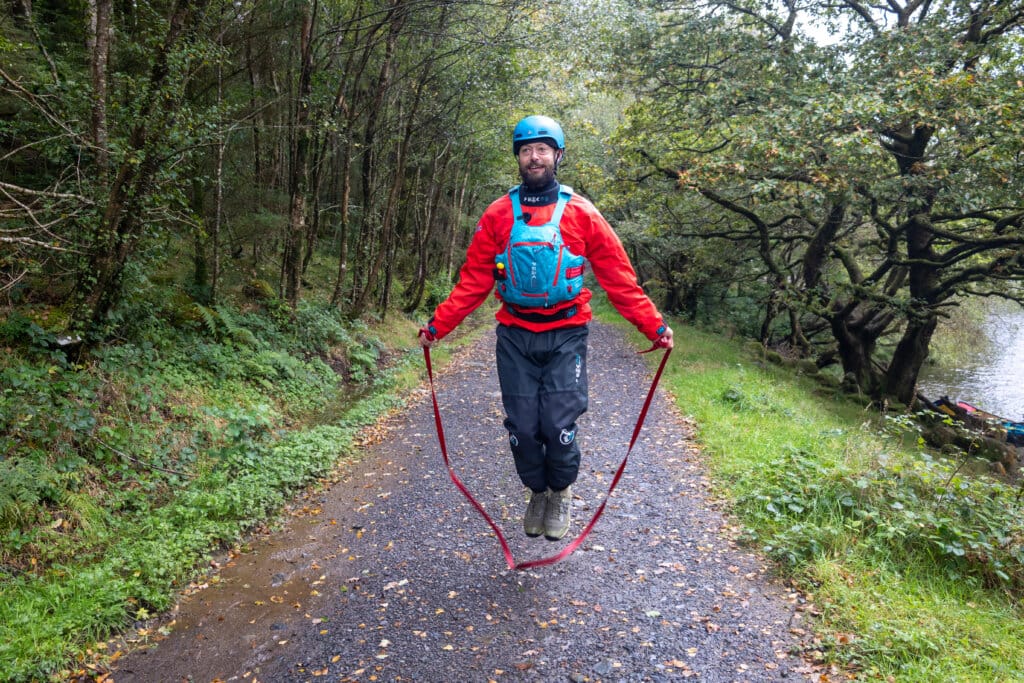
- As a skipping rope
- As a makeshift net for a game of volleyball at camp
- As a whip to make your bow padder go faster
- Slackline
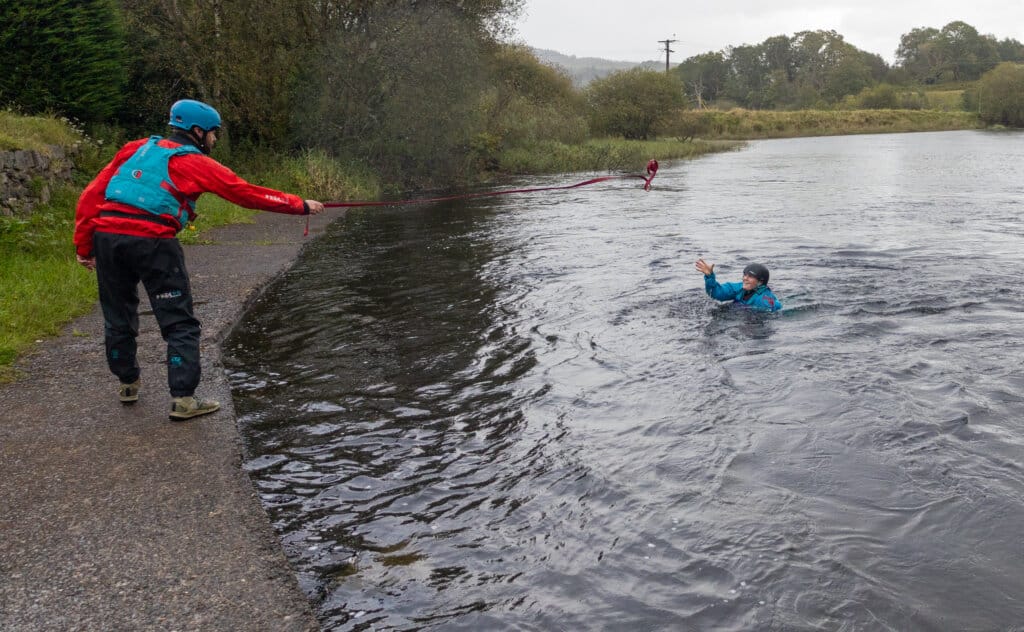
⚠️ Safety Note: Some of the techniques described in this article require specialist knowledge, training, and practice to use safely. Do not attempt them unless you are properly trained and confident in their application. Some of them are just plain daft.
For hands-on experience on this and more, check out our paddling courses.
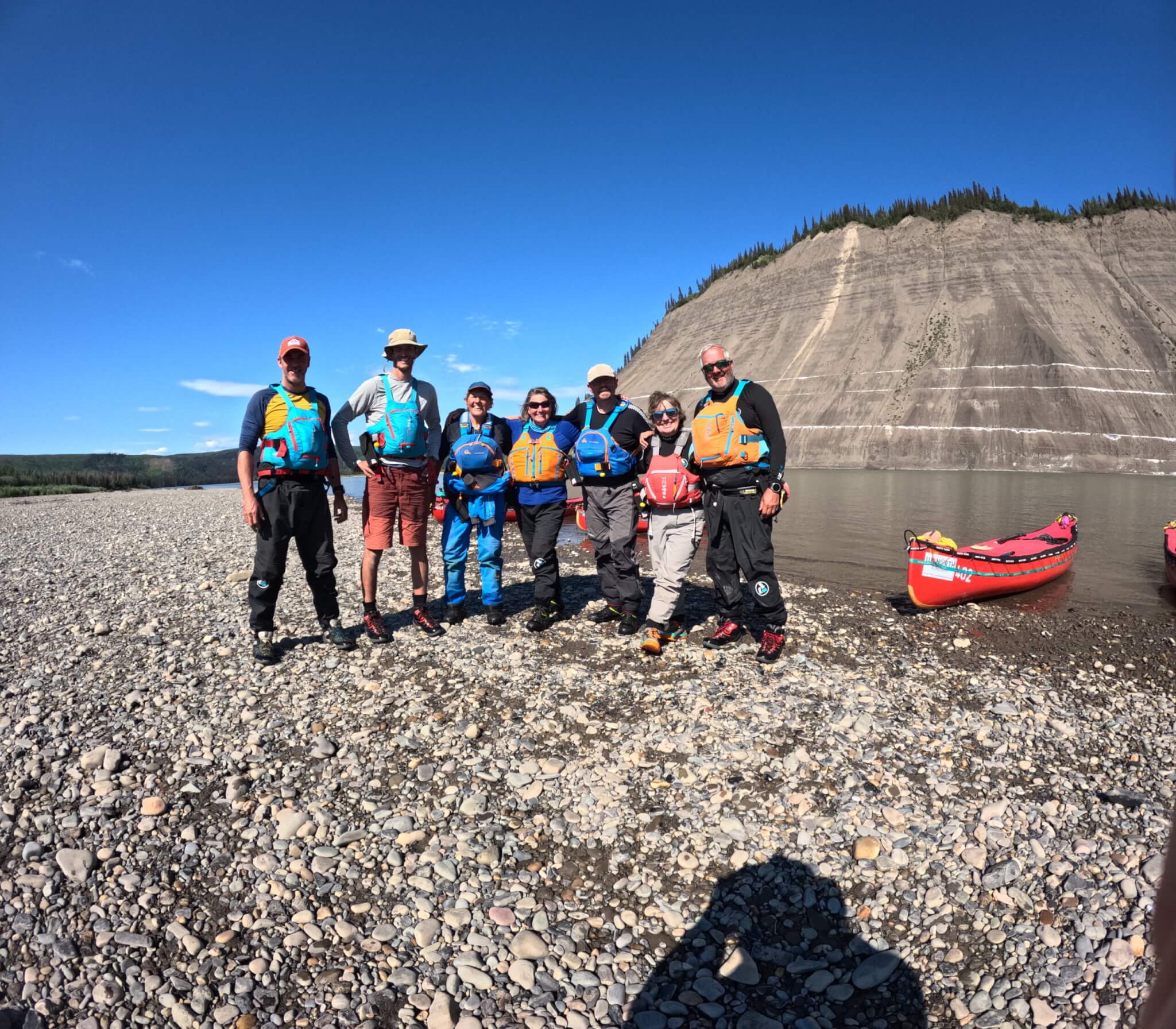
Embark: Snake river Northern Yukon territory
A year ago, Olly Sandeman was flipping through the pages of a guidebook, "Best Canoe Trips in Canada," when he came across the Snake River—300 kilometres of Grade 2/3 whitewater carving its way through the vast wilderness of the Northern Yukon Mackenzie Mountains.
After some research, we decided to offer the trip as part of PYB's Embark expedition series. These trips are coached expeditions, complete with training weekends and supported prep sessions to get a team ready. Five canoeists soon signed up for the adventure of a lifetime. The training weekend was a two-day mini-expedition focused on tandem whitewater skills, river-running strategies, and the specific skills needed for an expedition, like loading and paddling heavy boats. We also practiced essential campcraft and learned how to live safely in the wilderness and handle potential wildlife encounters.
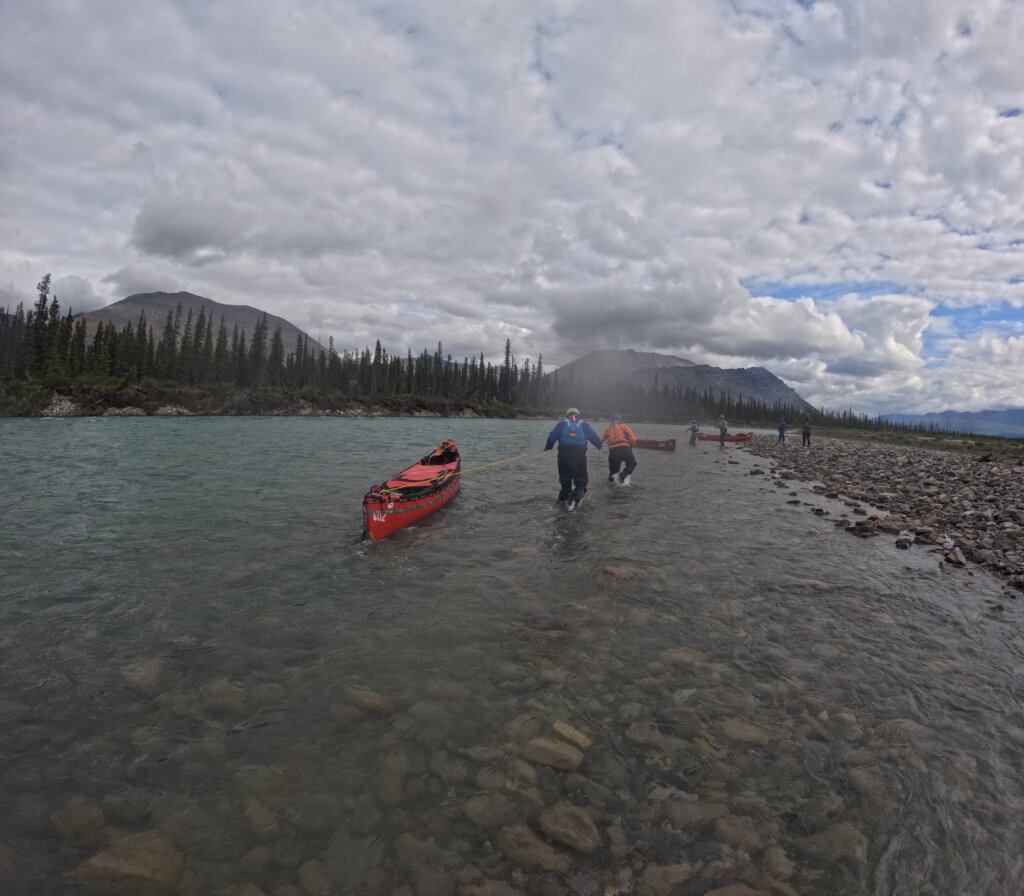
The journey to the Snake River is a long one. It began with a flight from the UK to Vancouver, then another two-hour flight north to Whitehorse, the capital of the Yukon. From there, it was a five-hour drive to the small town of Mayo, where we boarded a floatplane for an hour-and-a-half flight even further north to Duo Lakes. This final leg was a spectacular flight through the mountains, where the sheer scale of the wilderness truly set in. Once we landed, the roar of the floatplane faded, and we were left with the quiet understanding of just how alone we were.
The first night was surreal. We’d assembled our boats under the 24-hour daylight and watched a caribou swim across the lake. The next morning, reality set in: an 11-day portage over a two-kilometre trail. Four gruelling hours later, with all our gear on the other side, we ate a hurried lunch and launched our heavy, loaded boats into the river.
The river was a swift, narrow creek, the first few kilometres a slalom through overhanging trees and bushes. We were still finding our rhythm as a group, but the river gradually widened, becoming a boulder-strewn gauntlet. We paddled kilometre after kilometre through stunning forests, catching glimpses of the distant mountain range. It was a constant struggle to focus on the water in front of us when the scenery was so breathtaking. The real test came 15 kilometres in—a tight gorge with 90-degree bends pressed against a steep cliff. A single mistake, a swim, and we could easily pin a boat or get hurt. We were a long way from help.
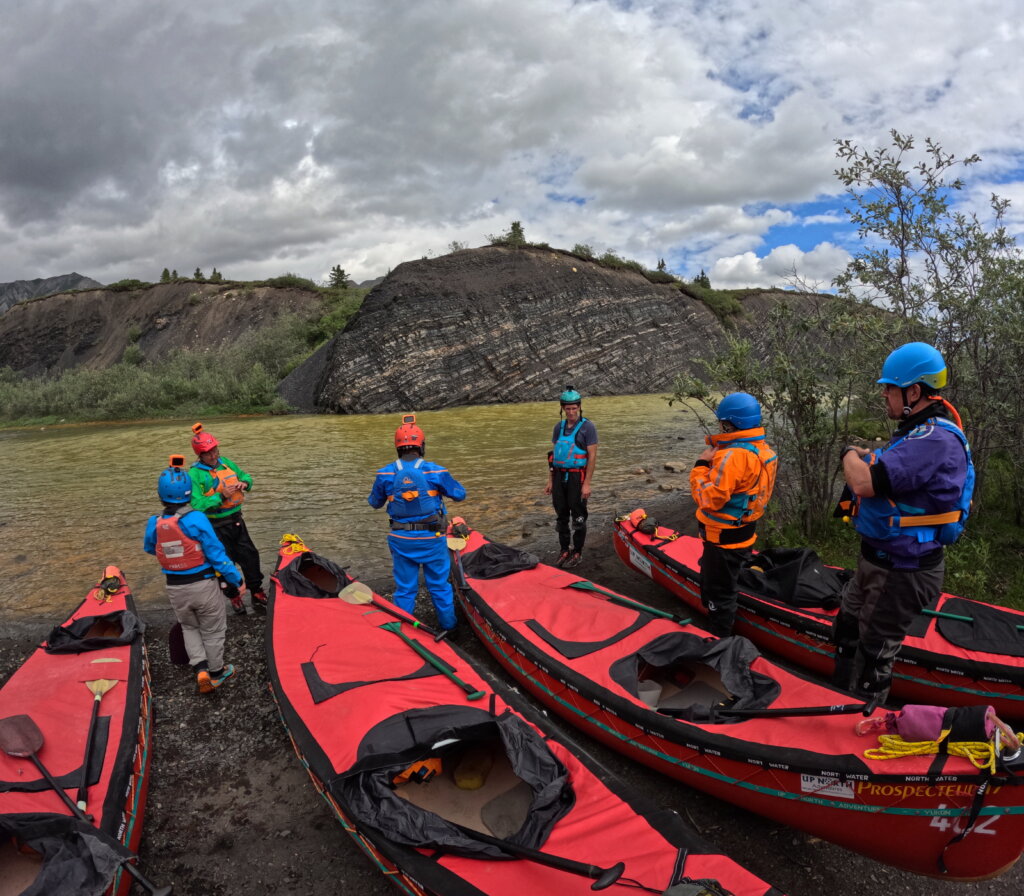
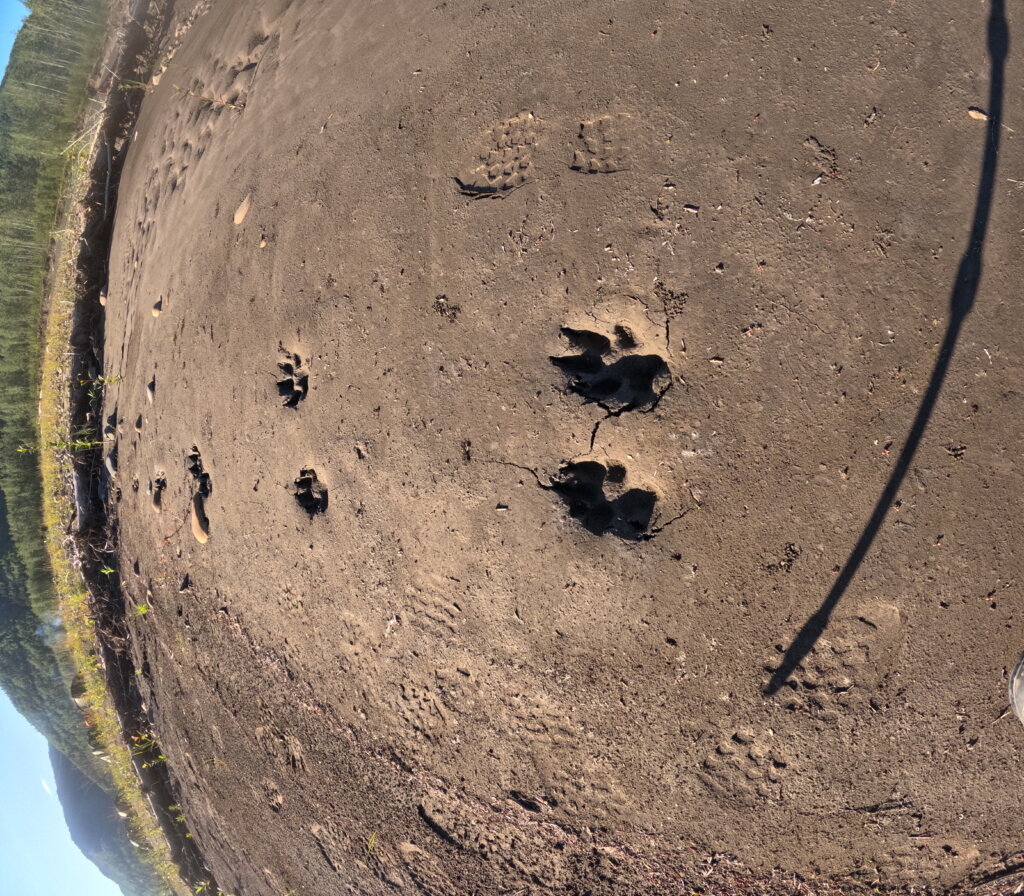
As the days passed, the river’s whitewater pushed us forward, and the views became even more spectacular. We glided past the towering peaks of Mount Macdonald, our camps marked by the footprints of wolf, caribou, moose, and bear. We were vigilant, camping with our food and cooking gear far from our tents and a tripwire alarm to alert us to any night time visitors.
By day eight, we left the mountains behind. The river gained volume and speed as we entered the lower section of the Peel River. The intense concentration we’d needed for days gave way to a newfound relaxation. We rounded bends to see moose, watched bald and golden eagles soar overhead, and were constantly entertained by the beavers that swam in front of our camp.
On day 11, we reached the final stretch and joined the vast Peel River, a legendary waterway that meets other famous rivers like the Bonnet Plume and the Wind. We approached our take-out at the “Taco Bar” (which, disappointingly, had neither tacos nor a bar) and met other groups who had completed their own journeys. Our final night was spent around the campfire, sipping the last of the whisky and, of course, watching more beavers. The last morning was a blur of packing as we awaited the floatplane.
The Embark expedition to the Snake wasn't just a trip; it was a bucket-list journey shared with incredible people in an incredible place. My gratitude to UpNorth Adventures for the Esquif canoe hire, Peak PS for the amazing gear, and to Bill, Sian, Mark, Sharon, and Carol for being the best possible team.
Drysuit or Separates?
Paddlers: Should you be in a drysuit?
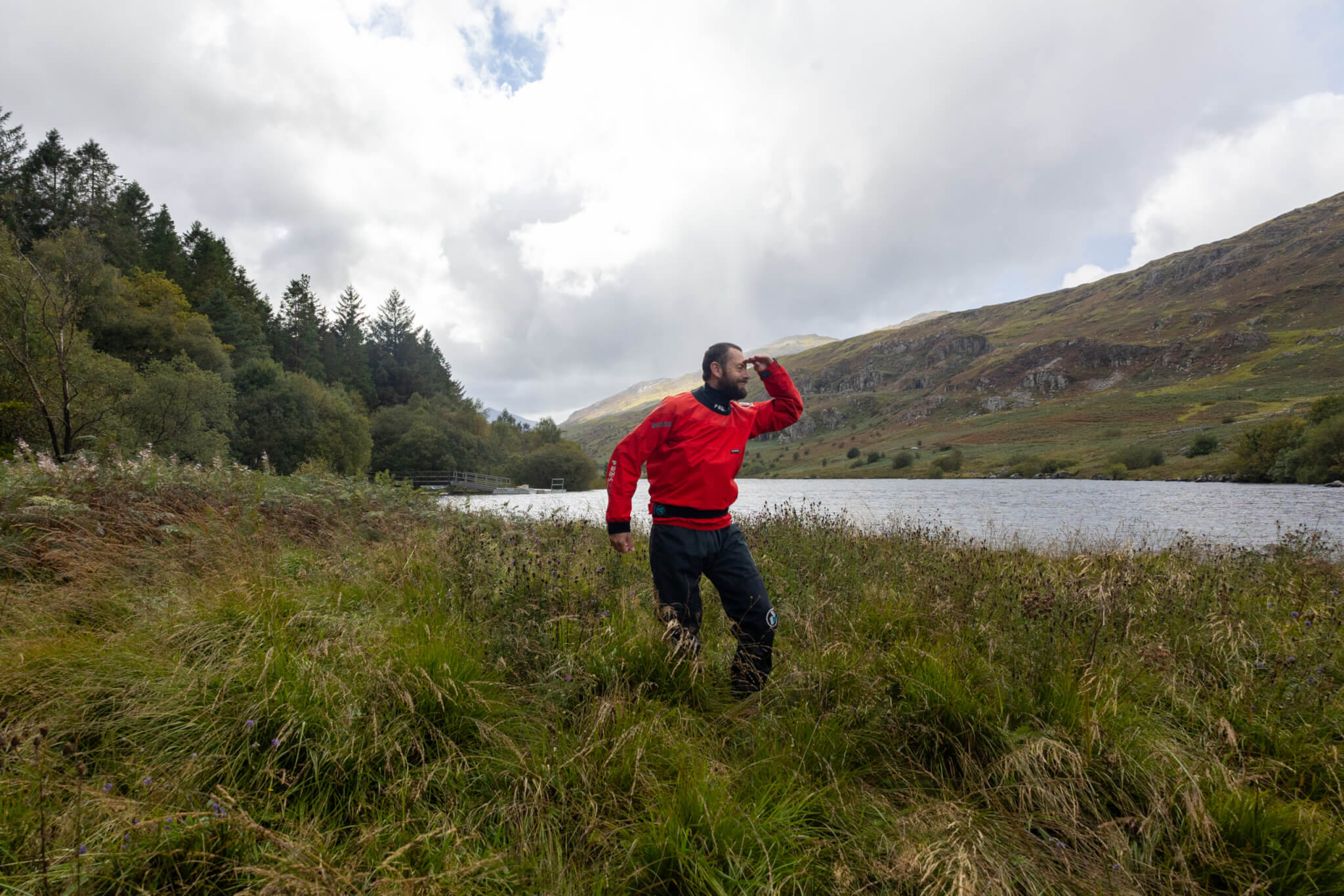
Drysuits are great don’t get me wrong, nothing beats being able to climb out of your suit at the end of the day and jump straight in your car for the drive home. But personally, I’m not convinced that they are the be all and end all of paddling clothing. For starters they’re a lot of money and when you fall over on that muddy, slippery, bramble choked bank and rip a hole in it, you have to send the whole thing away to get fixed. That's your entire paddling shell gone, so no boating for you for the next few weeks. My experience (depending on what you use them for) is that the tops and bottoms of drysuits don’t wear out at the same rate I often end up with one half trashed while the other half still has some life left in it.
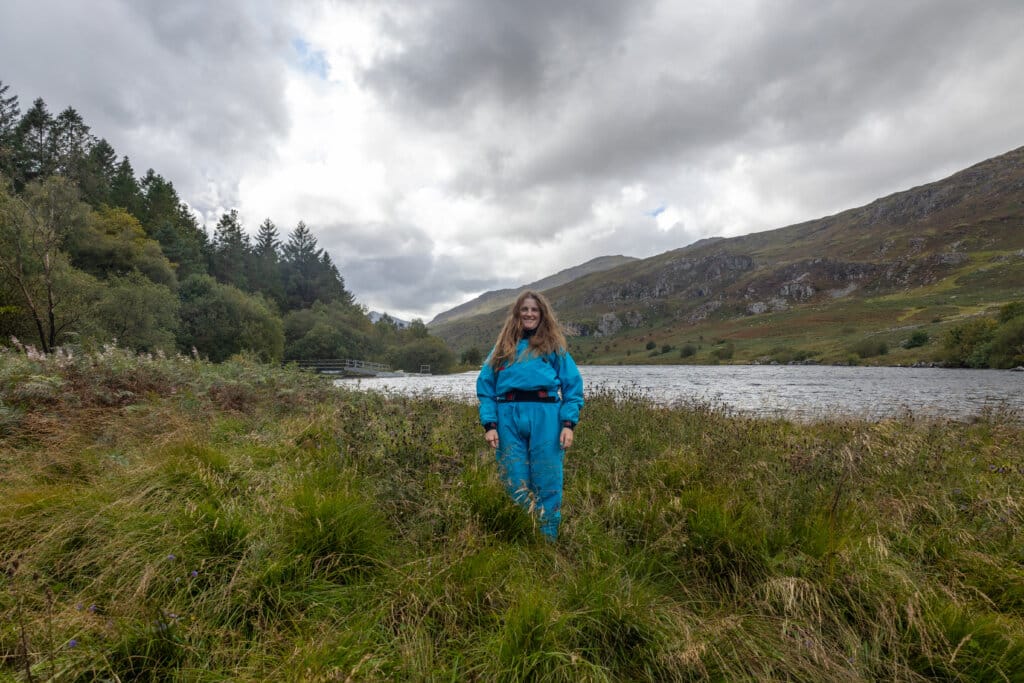
With separates on the other hand, you have choice and this is particularly great if you are into more than one type of paddlesport or are just starting out.
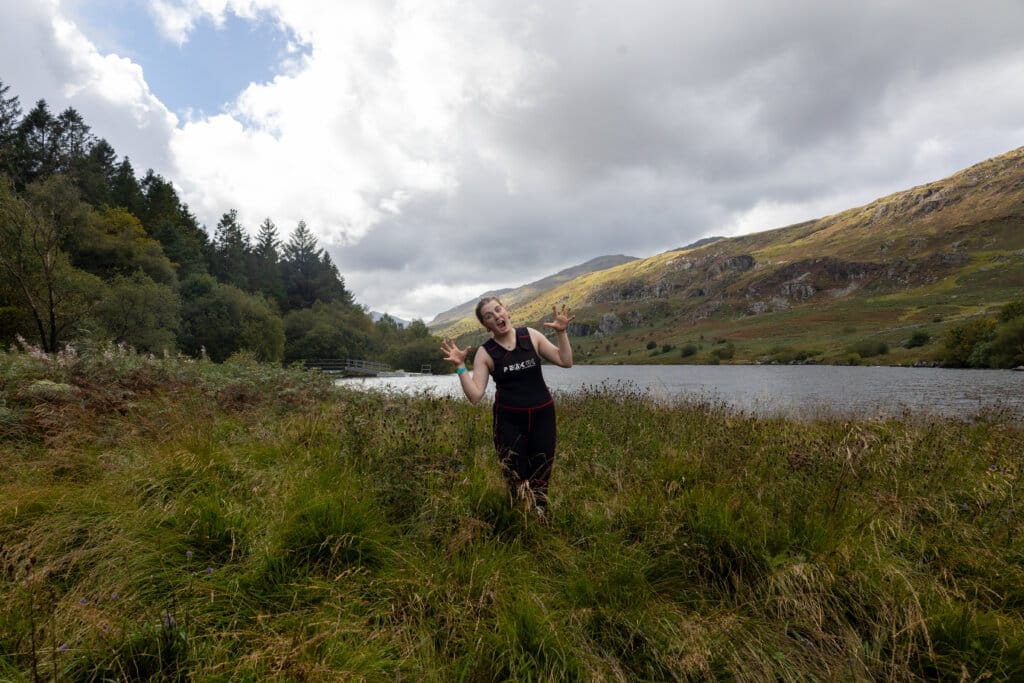
I remember back when I first started paddling many moons ago that my first dry cag even though it was only single waist was a complete revelation making paddling in the depths of winter so much more pleasurable. This is still a great way to start out... a Long John wetsuit and a dry cag. Possibly the most cost-effective all-weather option.
A dry cag also works well with:
- Board shorts such as Peak’s Bagz shorts ... Great when the weather is nice and warm.
- Thermal / neoprene leggings: Peak’s Neoskin Strides ... Super when it gets a little colder.
- Dry or semi dry trousers: Explorer Salopettes Evo ... Amazing for those winter paddles.
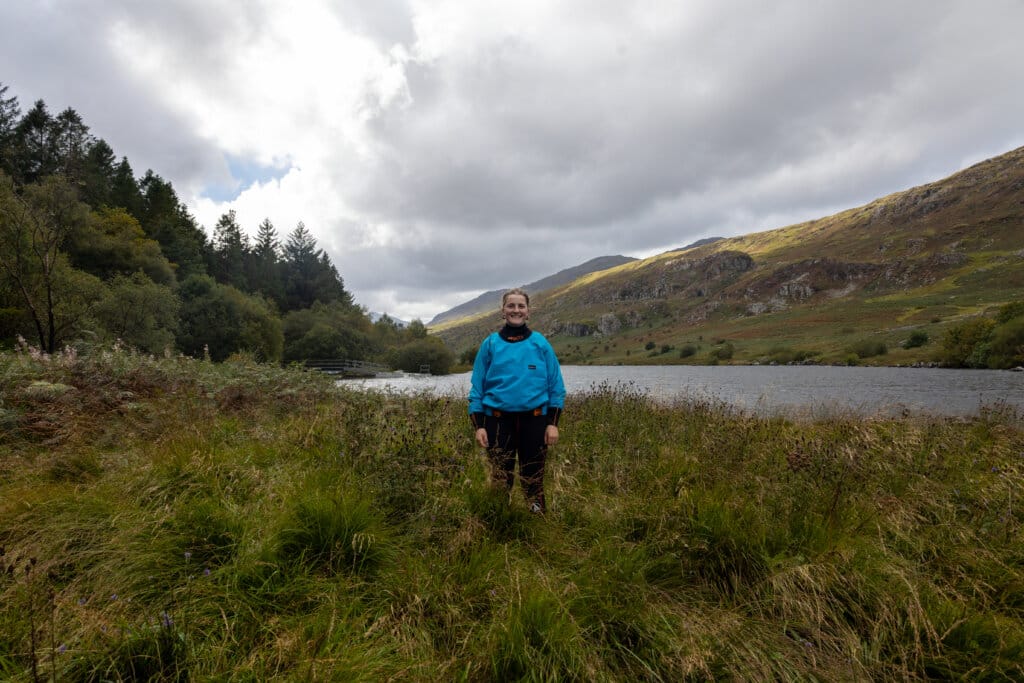
A good set of semi dry or dry trousers also work well with:
- A waterproof jacket such as your normal mountain jacket or multi sport jacket ... Great for canoe tripping or SUP touring, pockets and a hood what more could you want?
- A super warm synthetic insulated jacket ... So nice when the temp drops below freezing.
- Sea kayaking / touring jacket ... great when you want a hood and the benefits of dry arms.
But what happens when I swim? I hear you ask. Obviously if you’re in a drysuit you tend to stay pretty dry. If you are in a good quality set of dry trousers and dry cag then it’s almost as dry, especially if it’s a short swim. Don’t get me wrong if I’m teaching a rescue course where I’m intentionally repeatedly swimming then I’ll be in a dry suit. But most of the rest of the time I’ll be sticking with the versatility of separates.
Joining us on one of our paddling courses and not sure what to wear? We have a fully stocked store to keep you warm and dry.
Diary of a Centre Assistant (CA) - Jodie
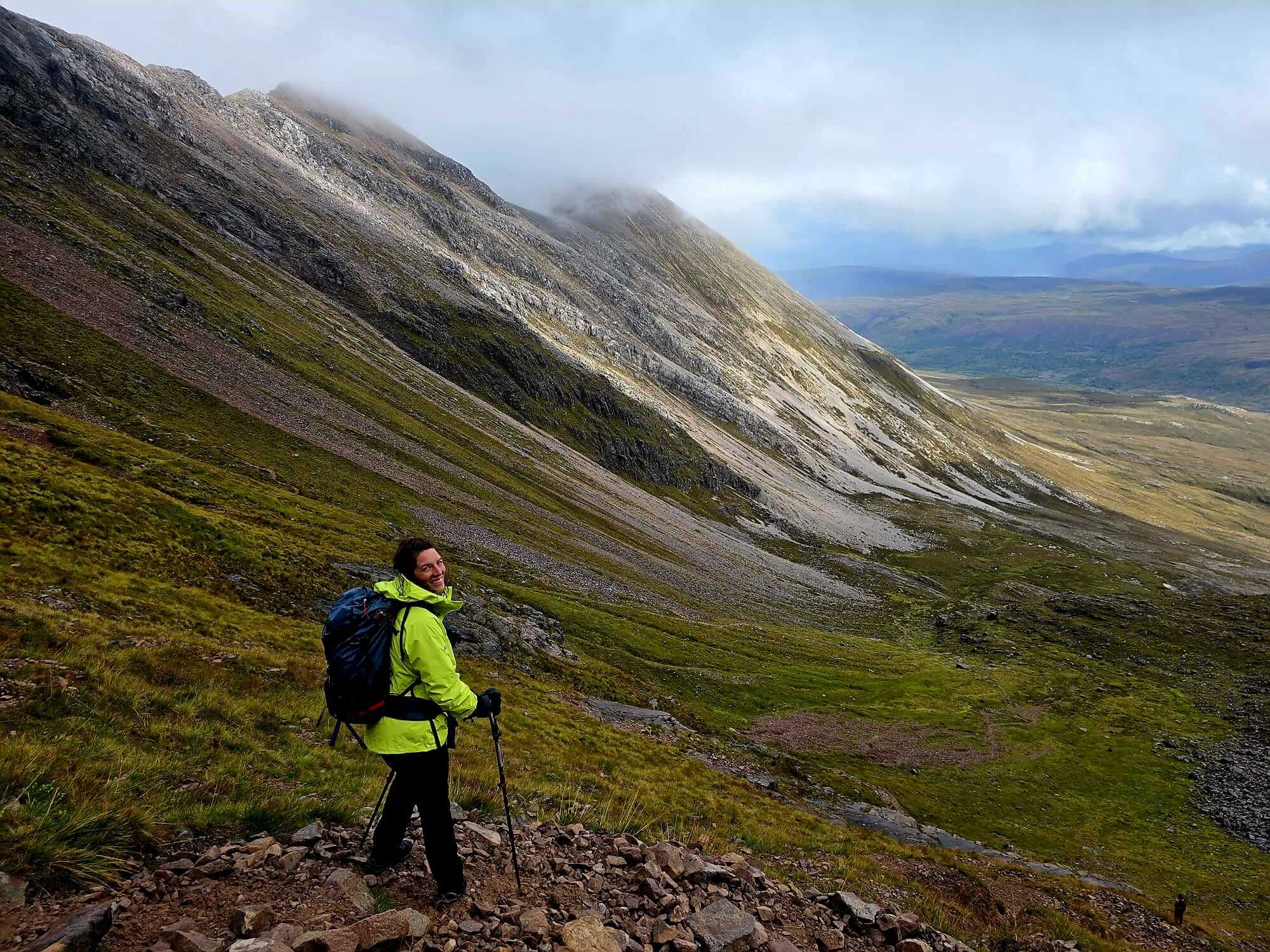
Jodie is one of our Centre Assistants. Not only do they keep the centre running, but in the course of their work, they gain skills, experience and qualifications to set them up for a future in the outdoor industry. Jodie has kindly shared a couple of reflections after a trip to Scotland...
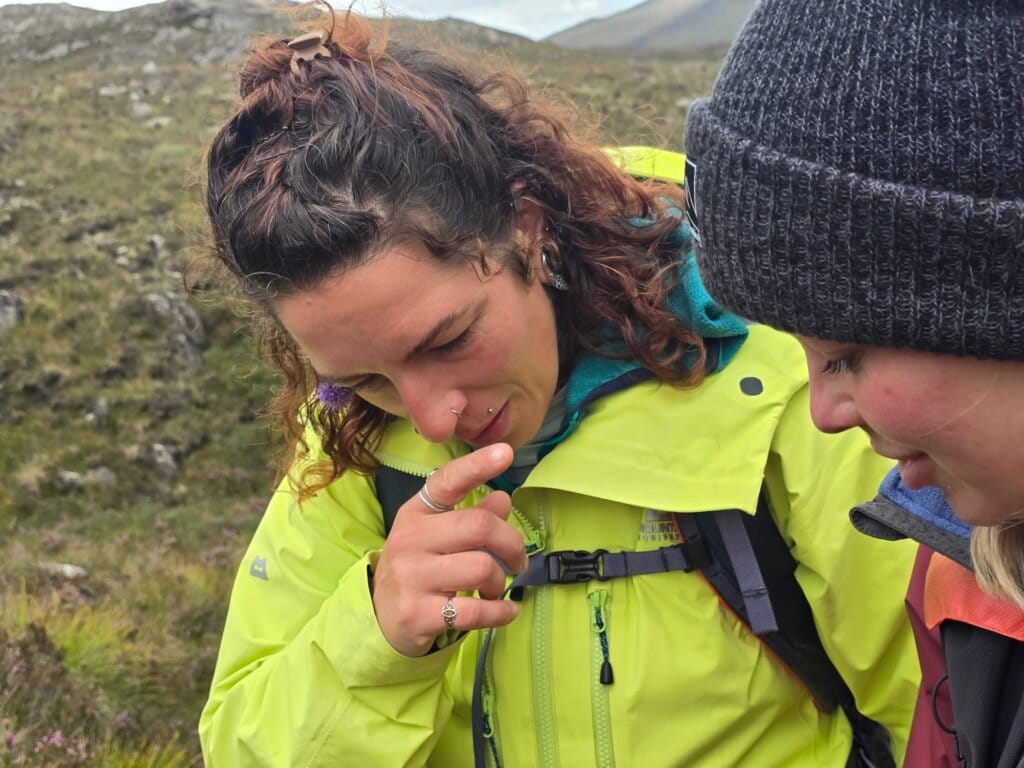
“While living in Devon I found myself constantly thinking of North Wales, the mountains, and how much I missed them...
Spontaneously applying for the Centre Assistant role at Plas y Brenin I had no idea what it entailed, only that it would take me back to the hills where I was longing to be. Super-stoked about having been offered the job, I had no idea about the upcoming perks to the role and working at the Brenin.
Since starting, I have completed numerous courses and training, had so much support and gained so much invaluable knowledge from all of the team.
A few years ago I had a thought that one day it would be nice to obtain my mountain leader qualifications but had no idea how I would get the time or funds for it. Regardless of that I began building up all my pre-requisites for the training and assessment.
Much to my surprise and shock, when I arrived, I was booked onto the mountain leader training and shortly after was told to start preparing for assessment!
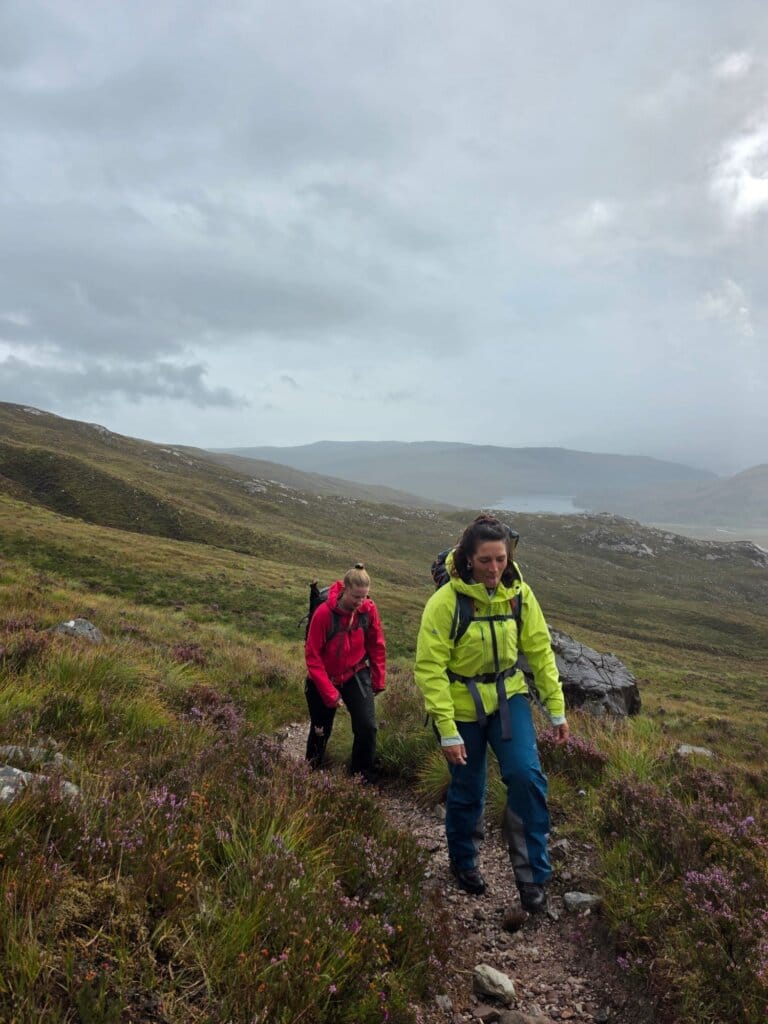
With my assessment fast approaching I have been working towards obtaining all the “quality mountain days” required for assessment, practicing navigation in unfamiliar environments, challenging terrain, and conditions.
Where better to practice such skills than the remote, challenging and wild landscapes of Scotland?
Having just got back from Scotland after spending almost 2 weeks in the hills, I have managed to obtain some quality mountain days.
In environments I've never set foot in, over challenging terrain, and in the constantly changing and often harsh weather conditions I successfully managed to navigate myself and some friends through the hills.
It was great to get the time to consolidate my skills, and build on the knowledge and tips gained from the team.
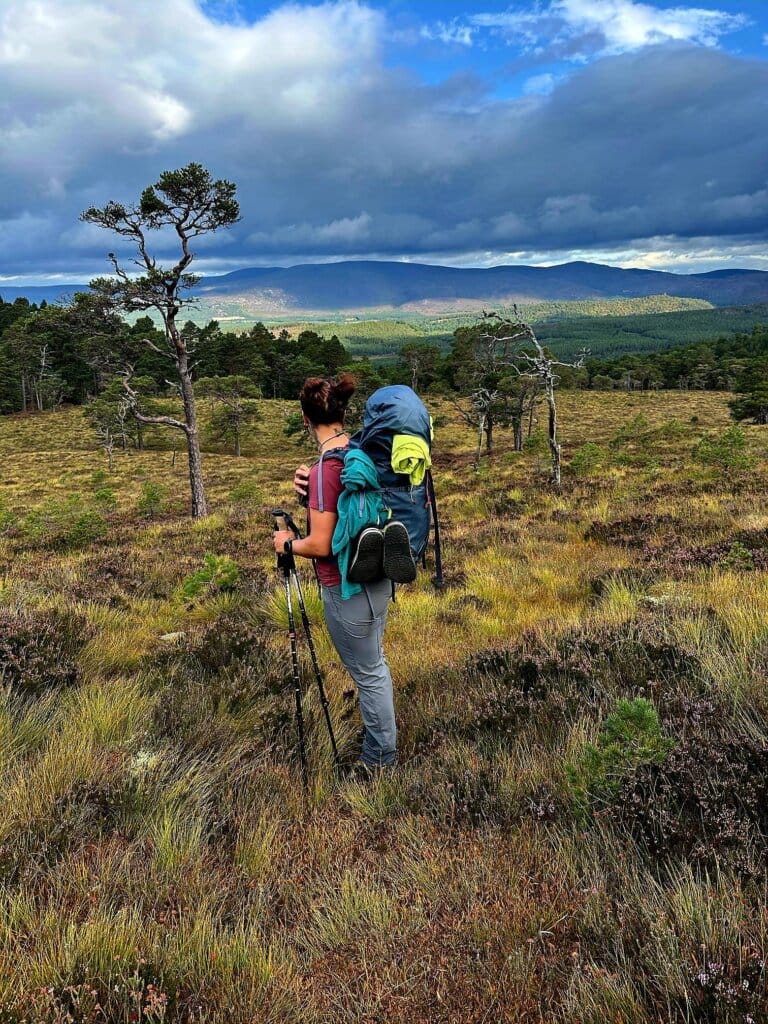
From Torridon to the Cairngorms, I got to explore some amazing and remote areas that were new to me... I can’t wait to get back out there and explore some more.”
Considering a career change? Check out our instructor development program -
Instructor Development Program
Want to work with us?
Diary of a Centre Assistant (CA) - Haf
The Torridon Classic
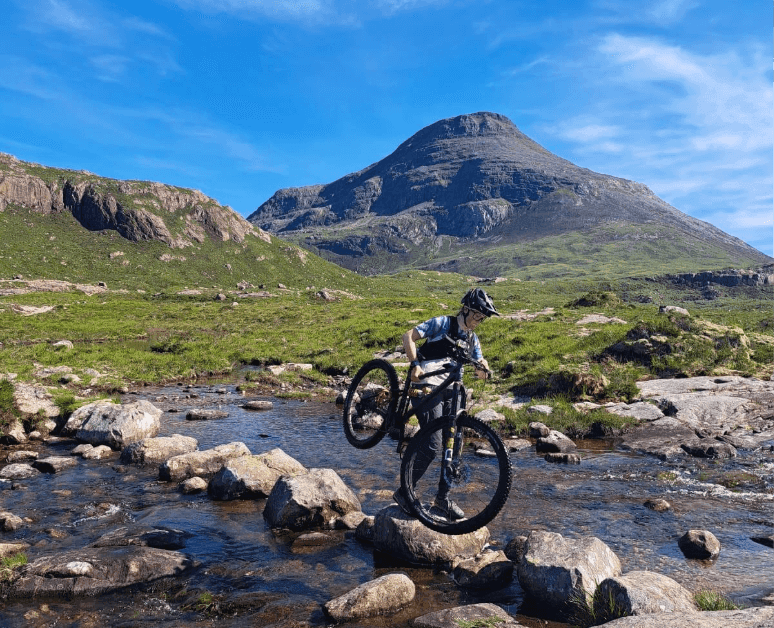
When Josh asked if I wanted to "recce" a route for work, I was hesitant—until he mentioned the location. The opportunity to ride in such a beautiful area was too good to pass up. We drove to Torridon and spent the first night at a free campsite. The weather looked bleak, but we were here, and excitement for what lay ahead was all that mattered.
We woke early on Thursday, a promising morning after the previous day's gloom. We packed up camp and drove five minutes to the start of the Torridon Classic. The car park was bustling with climbers and hikers, all of us setting off on our own adventures.
We didn’t know what to expect, other than two brutal climbs, each a 500-meter ascent, and the promise of incredible descents. After a few kilometres on a quiet road, we turned onto a dirt track that snaked through a massive estate. This led to the first big climb. A head injury had kept me off my bike for a year, and I'd lost a lot of fitness, so this climb was a gruelling challenge. The weather, which had been so promising, turned into a hot, windless day under a blue sky. We were forced to take lots of breaks, but the heat also brought out swarms of hungry horseflies.
Despite the challenges, this ride is still one of the best I've ever done. The first brutal climb was followed by an epic descent into Achnashellach. It's probably the most remote ride I've ever done, and while the thought of something going wrong was unnerving, it was exhilarating to access such a wild place by bike. The descent was a perfect mix of technical corners, switchbacks, and dreamlike rock slabs mixed with chunky, rocky sections.
We hit the halfway point in Achnashellach and refuelled with our trusted Lidl bakery pizzas. We were exhausted but prepared for the second climb, which felt like a fever dream. The glaring sun made it the most challenging ascent I've ever faced. I have to thank Josh for his patience; his fitness is on a different level, and the climb was a huge mental challenge for me, but he didn't mind waiting. After what felt like a year of climbing and a 20-minute break in a cold bothy, we reached the top.
The second descent was even better than the first, a seemingly endless series of slabs with a stunning view of Liathach in front of us. It took us all the way down to Torridon, where we stopped at the fancy Torridon Hotel for a couple of pints of coke. The bill was £15 for four cokes, ouch! It was incredible to end our journey at the sea after traversing such a massive landscape. I would recommend this route to anyone looking to get into bigger mountain rides. Remember to roam responsibly, respect the countryside code, and leave no trace.
Tips and Tricks for Hill Riding
Riding in the hills can be both terrifying and truly wonderful. Here are a few tips to stay safe in mountainous terrain, whether you're on a bike or on foot.
Having grown up in the mountains of North Wales, I've had countless opportunities to learn essential safety skills in these environments. I find it difficult to justify going on these big, remote journeys by myself because I've seen the consequences first-hand, but I do occasionally ride solo. When I head out alone, I ensure my phone is fully charged and I have a portable charger with me. I carry a well-stocked first aid kit and a group shelter, as well as a map and compass. I always send my route and estimated completion time to at least two contacts, letting them know when they should worry if they haven't heard from me. My partner, family, and I also share our locations on Life360 as an extra precaution since we all enjoy adventurous, and sometimes dangerous, pursuits!
Beyond emergency gear, I also ensure I'm dressed appropriately and have the right equipment. My bag always contains a puncture repair kit (plugs, patches, a tire boot made from an old toothpaste tube, and a spare tube), a multitool with hex keys, Allen keys, and a cross-headed screwdriver. I also carry a Lezyne Micro Floor Drive pump, a waterproof coat, and extra water at a minimum. Of course, this changes depending on the route, weather, and time of year.
Want to take your riding to the next level? Check out our range of skills and qualifications.
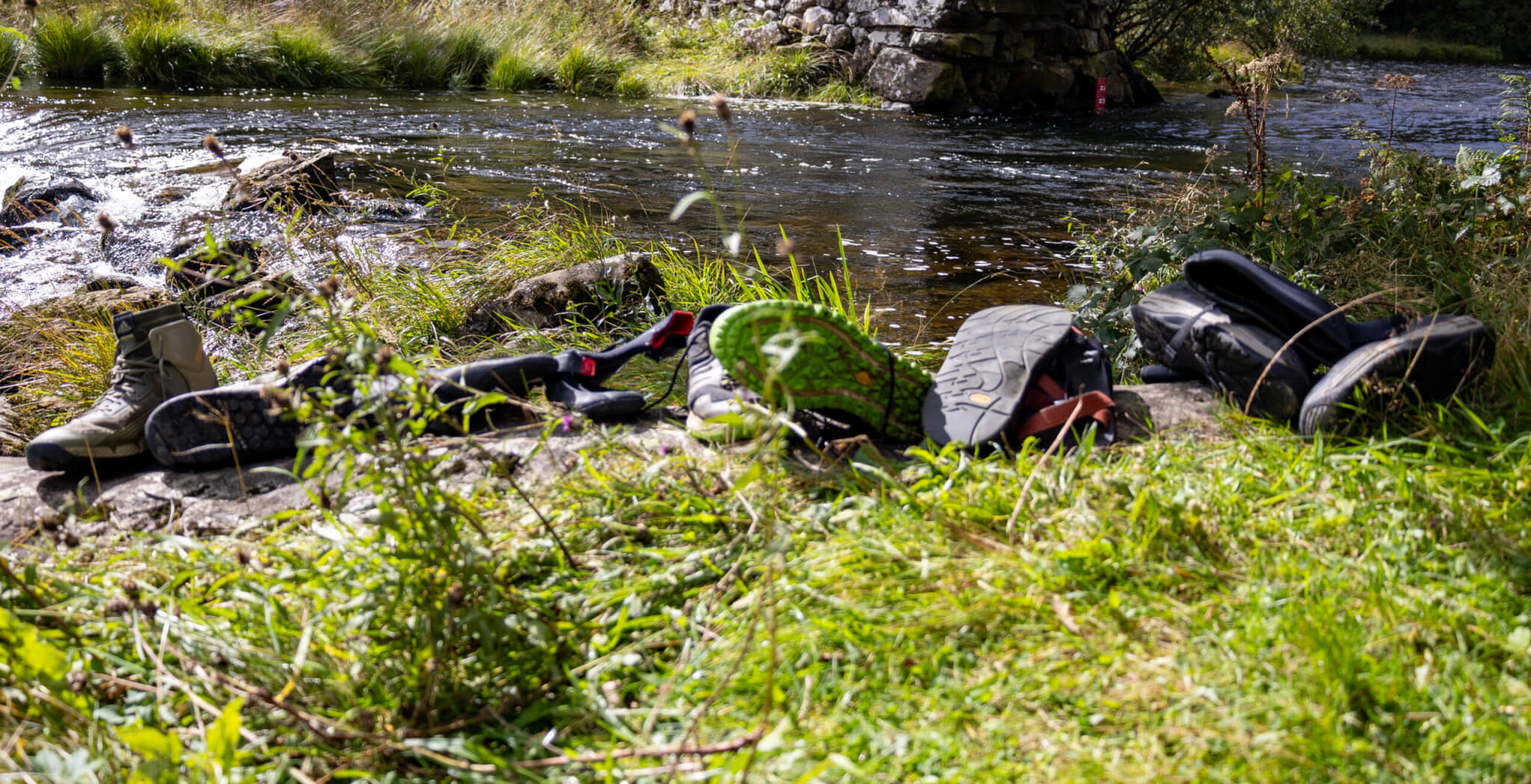
Paddlers: What’s on your feet?
It's an often asked, and perfectly reasonable question from people new to paddling. How and what do you choose from the large selection of available offerings? Now as with the answer to lots of outdoor questions...
It depends...
It depends on where you are doing most of your paddling and the type of craft you are in / on, this often requires a compromise.
If you are mostly paddling in the UK then most of the time it is pretty cold, so thermal insulation is top of the priority list. This is generally achieved in 1 or 2 ways (or a combination of the 2). This is either through the material the footwear is made from or through wearing thermal insulation on your feet AKA socks.
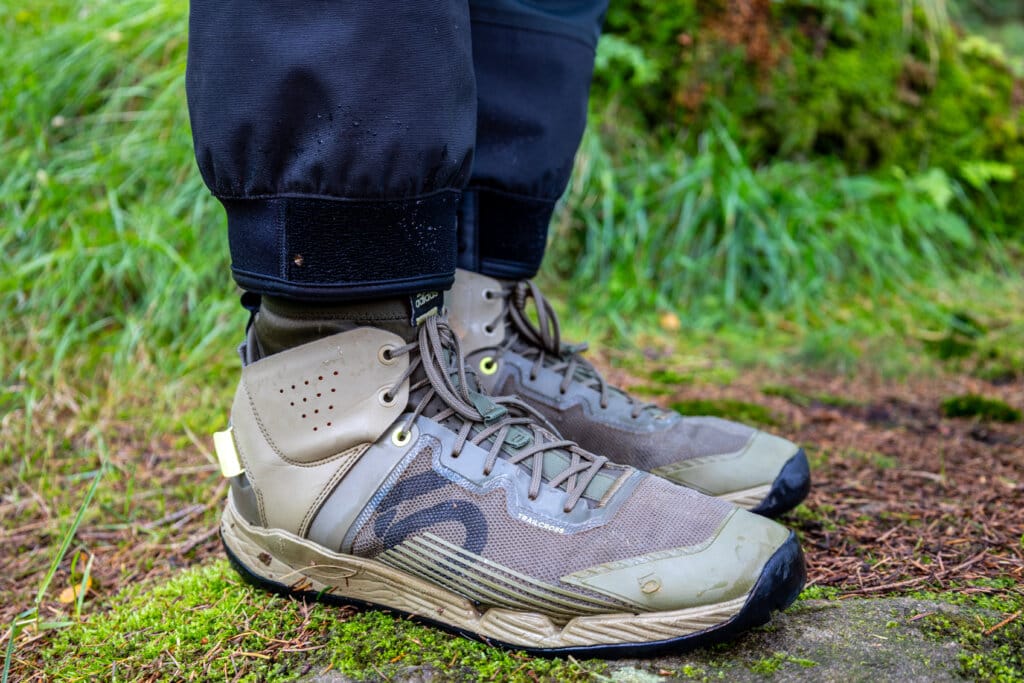
Footwear made from neoprene is generally the warmest. These can range from around 2mm up to 6mm thick. Obviously the thicker the neoprene the warmer the footwear. Neoprene works best when it has trapped a thin layer of water between it and you. This results in wet feet (which can result in some interesting foot fungus, or worse if feet are not dried properly at the end of each day) so if multiple days are planned then some way of keeping your feet dry is a good option... dry suit or dry suit trousers. Woollen socks work well when wet as do PrimaLoft socks although these are an expensive option. Wet suit socks work well if there is little to no insulation in your footwear and you don’t mind wet feet. Do not wear cotton socks your feet will only freeze.
If you paddle on UK rivers then you will spend a chunk of your time on steep often muddy and slippery banks. If this is the case then footwear with a deep tread pattern to cope with the mud is a good idea. Rubber that works well on wet rock is also obviously a great idea. Noting works well on seaweed... go carefully.
If your paddling destination will be rocky and sunny with not much mud (e.g. California) then something with a less deep tread pattern but lots of rubber to maximise your contact with the rock will work well.
Other things to consider are:
- They need to attach firmly onto your feet so that they stay on should you swim.
- The soles need to be thick enough so you can move quickly over sharp rocks to rescue your mate, without doing the “OO Ah dance.”
- Do you want boots that will provide some ankle support / protection but might be a bit on the clumpy side and be difficult to get into your boat / under a kneeling thwart? Or are you less concerned about protecting your ankles but more concerned about having something flexible and therefore possibly more comfortable?
- Wetsuit boots are often the warmest option but often have very thin soles and or soles that are very slippery, especially when it gets muddy.
- Will they fit with warm socks, wetsuit socks and or dry socks on?
- Will they survive the harsh river / sea environment and constantly being wet and then forced dried by you sticking them on the radiator or in a drying room?
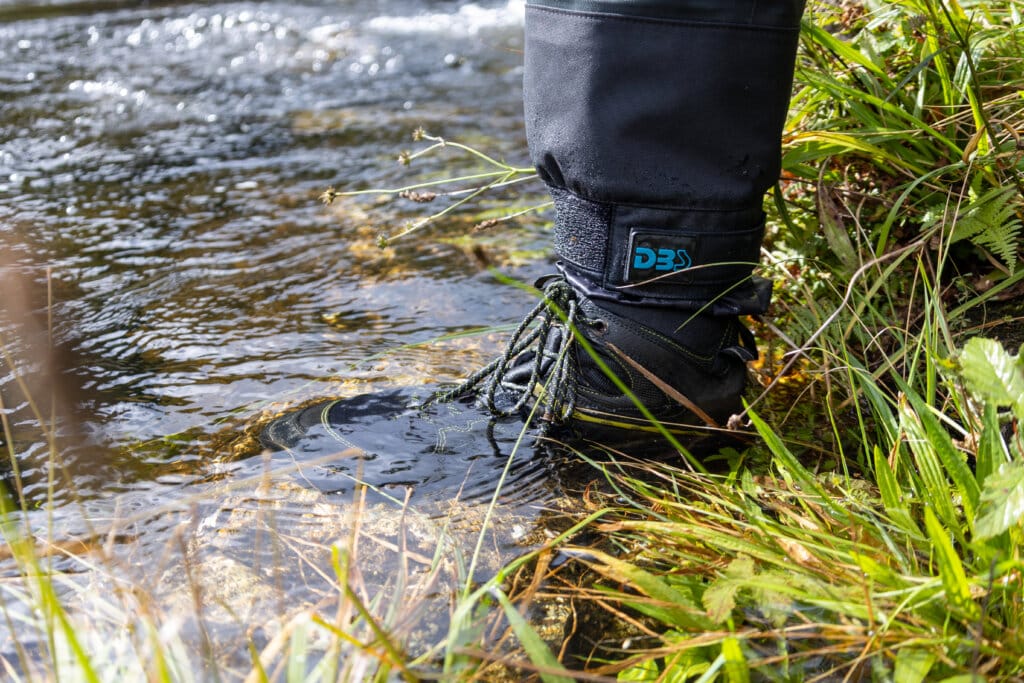
Look and think outside the box, my current favourite water shoes are sold as mountain biking boots.
Check out our paddling courses here:
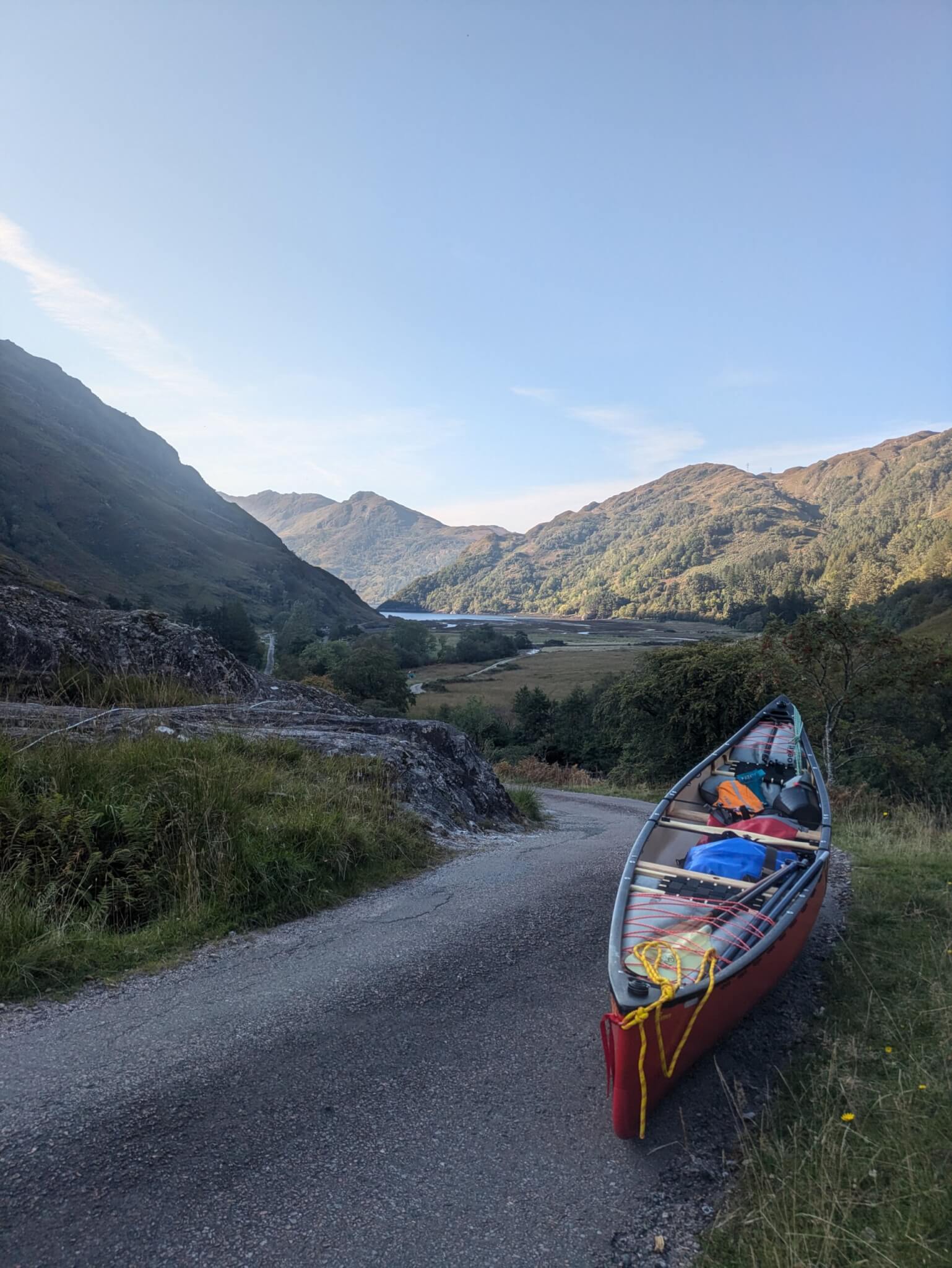
Morar to Morar : A solo expedition around Knoydart and the surrounding area.
Article by Ollie Sandeman- Head of Paddlesport at PYB
Every year, over the past few years, I’ve taken some time off to do a personal canoe expedition in Scotland, usually involving an area I’m yet to explore, a rather large portage and ideally a mixture of whitewater, lochs and sea.
I’d never done a solo expedition before, yet it had always appealed to me, I often find myself watching videos documenting solo trips from the likes of Jim Baird, Adam Shoalts or Noah of Northern Scavenger and wondering how I’d fair up on a solo trip.
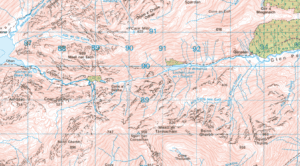
I’d been eyeing up a trip similar to what I’d done a few years ago, a circuit starting and finishing at loch Morar which met the criteria above.
I’d mapped the trip out to be 160km starting in Loch Morar and heading into the Sound of Sleat just South of Mallaig. From here, I’d venture up to Loch Hourn then portage 6km over into Loch Cuaich, onto the Garry, into Loch Oich, Loch Lochy down to Clunes then portage over to Loch Arkaig, then would start the notorious portage 13km through Glen Pean and into Loch Morar to finish back where I started.
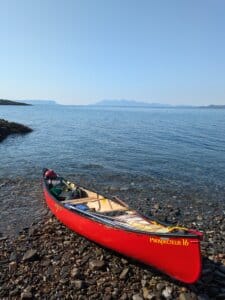
It was going to be tough, but I knew it was achievable in the six days I had.
Leaving Plas y Brenin after work I drove up making it to the Bridge of Orchy before I had to pull over for a kip. After a rubbish few hours sleep, I was back on the road and made it to Loch Morar for 9.30am.
Day 1
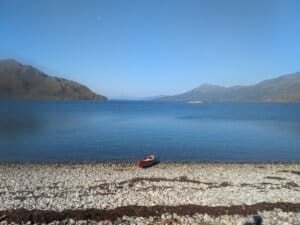
The conditions couldn’t have been better for the start of the trip, with clear blue skies and little to no wind.
Boat packed, I set off from the West side of the Loch and paddled down to the river. Unfortunately, after the first 100m is a weir which marked the first portage of the trip, a quick trolley down the road and back onto the water.
Just below the weir and under a bridge is a good little grade 2-3 rapid with a sticky hole at the bottom, with it being such a warm sunny day and confident that even with a laden boat I could make it through I hopped in my boat (nothing to do with the crowd stood on the bridge above me) thankfully, I made it through, yet a bit swamped, it was a nice way to mark the start of the trip and the beginning of the section on the sea.
Heading out of the Morar and into the Sound of Sleat, the conditions couldn’t have been better with little to no wind the water was completely calm, with seals following my boat and a white-tailed eagle flying overhead it felt great to be back in Scotland on another expedition. I made my way up to Mallaig and made the decision to cross the mouth of Loch Nevis, the cross is 6km, a big crossing in a canoe but easily manageable given the conditions. I made it a couple of kilometres into loch Hourn and set up camp.
I was treated to a lovely sunset and sat next to a fire starting to acknowledge what I had committed to, excited for the adventure which was to come.
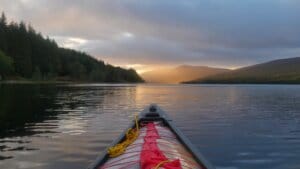
Day 2
I had never ventured into Loch Hourn before this trip and it was one which was high up on the list, Loch Hourn translates from Gaelic to Loch Hell with Loch Nevis being Loch Heaven, well I can tell you this Loch was far from Hellish! I had a gentle headwind to paddle into but the sun was shining and the scenery was spectacular, surprisingly I saw quite a few paddlers out on the Loch including a packrafter who I got chatting to, he asked where I was headed and mentioned a video on youtube where a couple attempt the Morar- Arkaig crossing resulting in a damaged ankle and a helicopter callout. I struggled to get this out of my head for a while until I had a very welcomed distraction, suddenly ahead of me I saw a pod of dolphins playing and jumping out of the water, I sat watching drifting along whilst the pod of about 10 dolphins played a stones throw from my boat.
I reached the narrows at Caolasmòr for lunch and tracked up the tidal flow and continued to the road at Kinloch Hourn to start the portage.
It was about 4pm by the time I’d reached Kinloch Hourn and with the boat and kit loaded onto the trolley I set off up the road, it was 6km before I’d reach Loch Cuaich with a climb of 260metres. Before long it was getting dark and the only company I had were the croaking stags, every now and then I’d pan around with my headtorch and see countless pairs of eyes shining back at me.
On looking at the mapping on my phone I could tell I was close to the loch but couldn’t see water when peering over the side of the road. I had set myself the goal of reaching the Loch before pitching up for the night, but tired and looking at the steep road ahead not knowing if it was unnecessary to push on, I decided to camp in a grassy layby and reassess in the light.
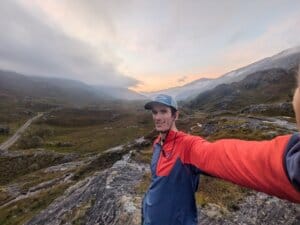
Day 3
I awoke early keen to press on and cover some distance, it was dark, damp and cold but I was eager to reach the water. Back on the road I continued to trolley up the road knowing it wouldn’t be long before reaching a side track leading me down to the loch. I was escorted down the road by a herd of highland cattle some in front and some behind, it was nice to have the company albeit a bit intimidating.
I made it to the water and after breakfast and filtering some water I set off across the misty waters of Loch Cuaich, reminiscing on a previous expedition that saw my friends and I portage over from Loch Nevis into the Loch, the next day or so it’d be following part of the route we did on the expedition a few years ago, so knew there were some great sections of the upper Garry to look forward to.
Before long I’d reached the dam which fed the River Garry and portaged up and over the dam to where I could get onto the river.
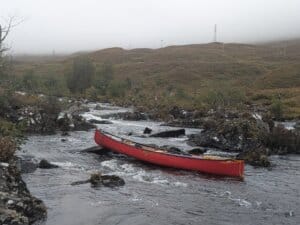
The upper Garry is a section which doesn’t seem to get paddled too often however if you’re up for an adventure I’d recommend it, the first few kilometers will put your lining skills to the test navigating through shallow rapids and drops before reaching a couple of exciting grade two rapids leading into Loch Garry.
This section took up some time and left some battle marks on my now not so shiny canoe, my new Esquif Prospecteur 16 was certainly being put through its paces.
Loch Garry was perfectly calm, the only disruption being the splashes of my paddle the deer running along the side and the otter I saw playing as I was half way down the Loch.
I arrived at the dam as the light was starting to fade and portaged around to where I could easily access the water the following day and set up camp.
Day 4
Much to my disappointment during my 6 days available, there was no release schedueled on the River so I knew I’d be scraping and lining my boat down with the compensation flows, it took some time to manage my boat down the river only able to paddle one or two of the rapids, good opportunity to practice my short lining skills though!
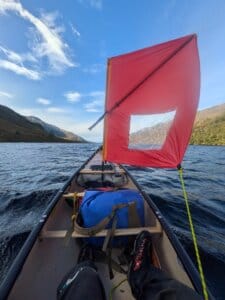
I left the Garry and joined the Caledonian canal at Loch Oich, there was a light bit of wind so I raised the sail and made my way to Laggan Locks for lunch.
Whilst at Laggan Locks I stopped for a coffee and sausage bap and got chatting to the lady who assumed I was yet another paddler doing the Great Glen, I always chuckle to myself on these trips when people ask where you’ve been and where you’re going and the look of confusion when telling them the route.
Fuelled up, I was on the water at Loch Lochy and had a tail wind, sailing down to Clunes with a force 3 wind, brilliant to cover some kilometers whilst getting some much needed rest.
I arrived at Clunes pulling up on the banks and being greeted by a group who were paddling the Great Glen, it was about 4pm. I was pretty cold by this point, my paddling thermals were damp and having sat still whilst sailing I was chilled. I started carrying my kit up to the road and got chatting to the group, before I knew it I was sat around there fire with a slice of banana bread, refueling and reheating myself up before the portage over to the Arkaig. I love how friendly the paddling community is generally and the kindness these paddlers showed me was a much needed boost in morale, I must admit it was hard to leave that fire knowing that I had a long night ahead of me, setting my sights on reaching the end of the Arkaig before the end of the day.
With the canoe back on the trolley I set off over over the 3km portage to Loch Arkaig, whilst dragging the canoe along the road I started chatting with a lady who was out walking her dog, when she found out I was heading over into Glen Pean and doing the crossing into Morar she looked at me bewildered, having hiked the route she informed me of how steep and rough the terrain was, she wished me luck (following the trip she tracked me down on the internet to send me a message to check I’d made it!).
It was about 6pm by the time I reached the Loch, I had a rest to refuel, cooking up some dinner to give me the energy I needed for the 19km paddle across the Loch to camp.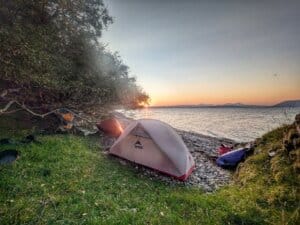
Loch Arkaig was a Loch I had yet to paddle and one which had been high on the list for some time, with pine woodlands along the shoreline and overlooked by dramatic mountains it’s a very scenic Loch, I was treated to calm conditions and a very atmospheric paddle with the sun setting behind the mountains and light sitting in the mist.
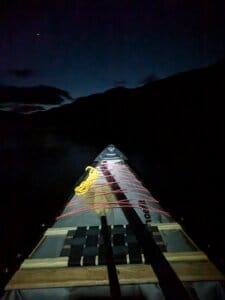
Before long the light had gone and I was paddling in complete darkness, by this point I was just under halfway down the Loch, I was cold and tired and it was no longer such an enjoyable paddle, I decided to put some headphones in and listen to a podcast to lift my spirits and pass the time.
The sky was completely clear, and the stars were out in force spotting multiple shooting stars, suddenly I hit a rock which gave me the fright of my life, I turned my headtorch on and realised I had made it, I had reached the river Pean and it was time to set up camp, it was about 10pm.
Day 5
Once again I woke early partly due to a poor night’s sleep and partly to crack on, there was a cold mist sweeping through the valley and with lots of my kit being damp it was difficult to stay warm.
Today was going to be a big day with the plan to break the back of the portage, I set off paddling up the river hoping to get as close to the bothy as I could. Initially I could paddle, then I started to pole and then drag suddenly it was pointless the river was so low I had to portage, I was at Strathan a mere kilometre from camp.
I carried the boat up to the forestry track and started to trolley up the road towards the bothy, it was 5km up the track before I’d reach Glen Pean bothy.
Although steep the track was a well maintained forestry road up until the last 200meters or so, I had been incredibly lucky with the weather so far and today was no exception it wasn’t long before I’d shaken off the cold chill from the poor nights sleep and was sweating under the midday heat.
Carrying the boat down to the bothy I could now see the valley which lay before me looking ominous, I knew I had a real challenge waiting for me.
I stopped at the bothy and took the opportunity to have a longer lunch break to dry out kit and refuel before the trudging would commence.
The bothy was lovely and well maintained such a shame that I wasn’t to be staying there that evening.
I had reorganised my bags and set my system ready for the portage, I was carrying a Watershed 65Litre drybag with my tent, sleeping bag & mat, clothes etc with a NRS 35 litre duffel for my food and cook system.
I had tied my trolley to the bottom of the big rucksack and secured my poles and paddles to the straps on the top of the duffel. I then slung the small duffel on top of the rucksack and headed up into the valley.
On these trips I often keep my salopettes on until I crawl into my tent, this is usually as a tick prevention measure or to keep my feet as dry as possible, it was definitely required for this section, I’m sure some of the readership will relate to sinking into boggy marsh with a canoe on your shoulders, it’s a sure way to test your composure! It was a common occurrence where I’d sink up to above my knee and have to fling the canoe off and climb out the bog and reset.
The downside to this was it felt like being a boil in the bag with the heat.
There were a few sections where I’d cover on the creek poling and dragging and before too long I’d made it onto the first lochan.
I stopped here for a few minutes to take in the serenity of where I’d found myself, there were near perfect reflections on the water and it was completely still with no wind and glorious sunshine.
A short paddle and back to it, there was no track of note just broken tracks of where deer and the occasional walker had been and the river snaking its way up the valley meant you had to cross multiple times, unfortunately it was too low and windy to use.
It got to 6pm and I’d reached a steep section chocked with boulders, I considered camping for the evening but with little flat ground and the area being predominantly marshy I knew I had an hour and a half or so of light left and thought there would be a nicer spot in the small lochan past the boulders.
I knew this section was going to be tricky and dangerous so ensured the PLB was clipped to me at all times, I took the bags up and over to find the small lochan had completely dried up leaving a bog which sat between the boulder choke section and a steep climb ahead.
I carried the boat on my shoulders and carefully navigated the boulders making it down to the bog.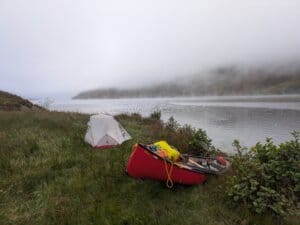
Light started to fade and so did morale, this was the first solo expedition I had done, with one of the attractions to doing a tough solo trip like this being to test me physically and mentally, I had faired well up to this point but with the lochan dried up, no place to camp, light fading, stags croaking and a really steep section ahead of me this was a point where I wished I had company to lift spirits.
I knew camping here was a bad move so decided to leave the boat and take what I needed for the evening and climbed up to the height of land.
I got to the top and found an amazing spot to camp which looked down on the valley towards Loch Morar, I couldn’t see the Loch, but knew once I got my boat to this point it was all downhill.
I pitched up, had some food and tried not to concern myself over the challenge id face in the morning of how to get my boat up an even harder and steeper section than the boulders.
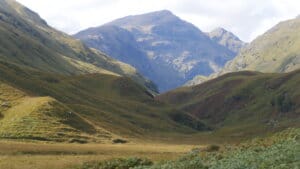
DAY 6
The wind was so strong during the night, I had to check that my kit wasn’t going to be blown off the high point where I was camped, not only did I have to get my boat up to where I was but a further 2km to reach the Loch, portaging in really strong winds.
I climbed down to the Lochan and put the boat on my shoulders and started to clamber up the steep mossy boulder climb, resting every now and then and taking it slow in order not to make a silly mistake and injure myself.
Once at the high point I slid my boat on a line as far as I could then continued under the yoke.
Before long I could see the Loch which provided the boost I needed to press on, and before too long I arrived at the Loch just up from Oban Bothy.
The view looking back up where I had just been was pretty spectacular, I’m glad It wasn’t the view I was greeted by at Glen Pean Bothy as I may have just turned around!
I had some lunch and took a moment to take in my achievement and my last few moments alone in the Scottish wilderness, knowing that in 16km I’d be back where I started my expedition and returning to civilisation.
Typically, the wind which I had hoped would send me down the Loch had all but disappeared, I slowly drifted down the Loch glancing behind me every now and then to look where I had been, then picked the paddle back up and pushed on for the last few km of the trip.
I’d done it, Morar to Morar 160km in 6 days. A trip that lived up to all I hoped it would be and a trip that will stick with me for some time.
No rest for the wicked boat on the roof, it was time to head over to Glenmore lodge for the Open Canoe Symposium, thankfully I had a day to recover!
If you want to follow my journey check out the short film I made titled “Wild Voyage” on Youtube at @oliversandemancanoe
-Ollie-